The Ritual of Black-Eyed Peas
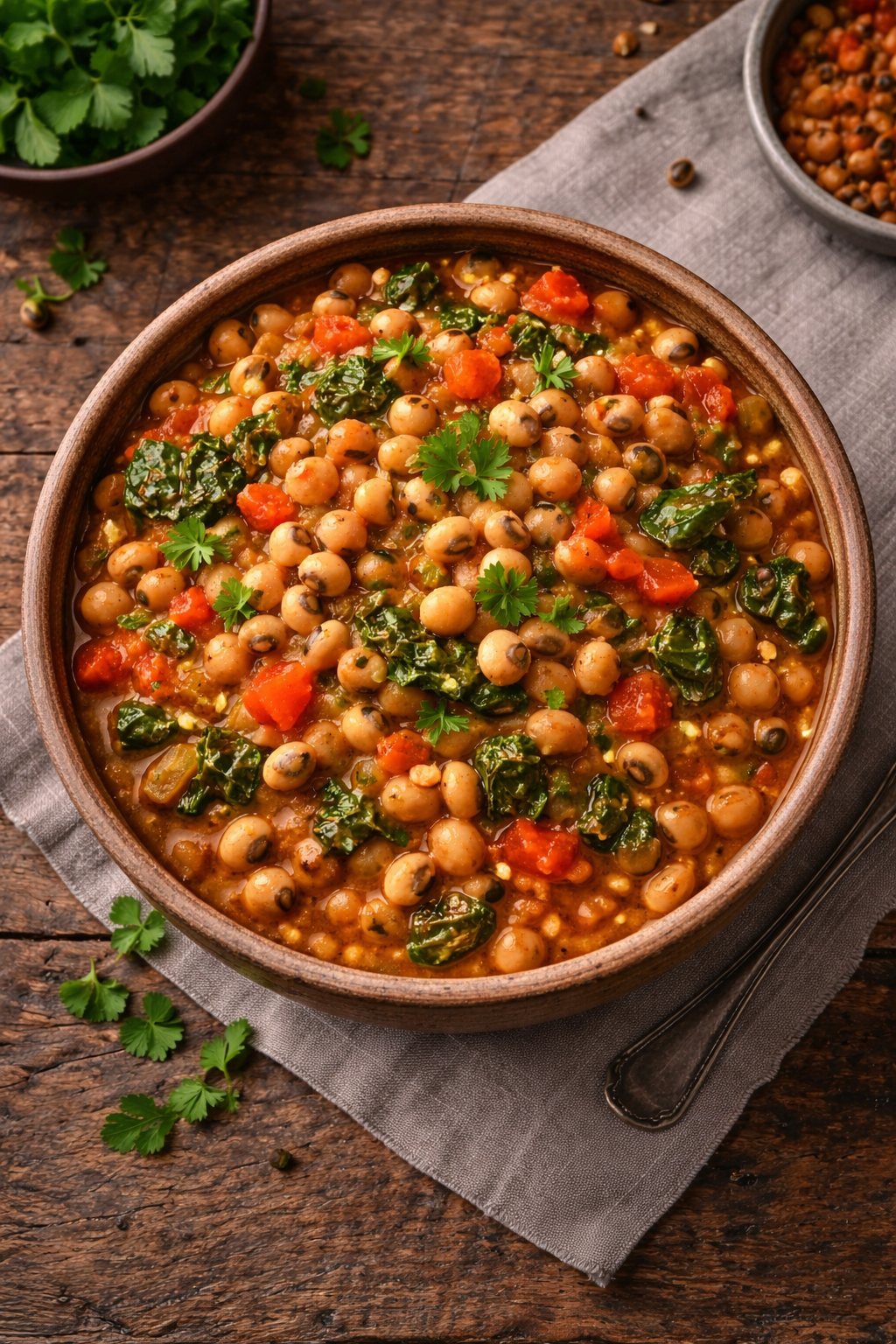
Great food is never just about nourishment—it’s about rhythm, care, and the choices we make day after day. What we place on our plates shapes our energy, our clarity, and our ability to show up fully for our lives. When food is prepared with intention and sourced with respect, it becomes an act of devotion rather than consumption. Over time, these small, mindful moments accumulate, supporting longevity not only in years, but in vitality, presence, and joy. Have a beautiful day and great meals!
A Bowl of Good Fortune
New Year’s Eve is about celebration. New Year’s Day is about intention. Across cultures, January 1 carries a quiet gravity—an invitation to begin again, wisely and hopefully. In the American South, that hope often arrives in the form of a humble bowl of black-eyed peas.
Long associated with luck, prosperity, and forward momentum, black-eyed peas have been eaten on New Year’s Day for generations. The symbolism is simple and poetic: the peas resemble coins, leafy greens represent paper money, and cornbread stands in for gold.
Despite their name, black-eyed peas are beans, also known as cowpeas. They originated in West Africa and were brought to the United States through the transatlantic slave trade. Africans cultivated them throughout the South, embedding these resilient, nourishing beans into the region’s foodways. While black-eyed peas were eaten ceremonially in West Africa, the New Year’s luck tradition itself comes from European superstition. Over time, the two cultures merged. The ritual is European, and the vessel is African.
Today, the tradition continues in many forms—from classic recipes to vegetarian stews, curries, and modern reinterpretations. Whether simmered slowly on the stove or simply shared at the table, black-eyed peas offer more than sustenance. They carry memory, resilience, and aspirations that the year ahead will be abundant.
If you’re looking for a grounded, meaningful way to welcome 2026, a pot of black-eyed peas is a beautiful place to begin.
Here is one of my favorite black-eyed peas recipes
Savory Vegetarian Black-Eyed Peas
A hearty and flavorful dish packed with veggies, a hint of smokiness, and a tangy finish. Perfect as a side or a main dish!
Serves: 4 to 6
Prep Time: 15 minutes
Cook Time: 45 minutes (plus time for pressure release)
Ingredients
1 cup dried black-eyed peas (soaked overnight) or 2 cups canned black-eyed peas (rinsed and drained)
2 tablespoons olive oil
1 medium onion, diced
2 celery stalks, diced
2 medium carrots, diced
2 garlic cloves, minced
1 cup collard greens, finely chopped
1 teaspoon smoked paprika
½ teaspoon sweet paprika
1 teaspoon dried thyme (or 1 tablespoon fresh thyme)
½ teaspoon ground cumin
½ teaspoon black pepper
½ teaspoon sea salt (adjust to taste)
3 cups vegetable broth (or water)
1 tablespoon soy sauce
1 tablespoon apple cider vinegar
Optional Garnish:
Chopped fresh parsley or green onions
A drizzle of olive oil
Directions
Prepare the black-eyed Peas:
Soak black-eye peas overnight
Sauté the vegetables:
Instant Pot: Use the “sauté” option on the Instant Pot
Stovetop: Heat olive oil in a large pot or Dutch oven over medium heat
Add the diced onion, celery, and carrots. Sauté for 5 to 7 minutes until softened.
Stir in the minced garlic and cook for an additional minute.
Add the greens and spices:
Stir in the collard greens, smoked paprika, sweet paprika, thyme, cumin, salt, and pepper. Cook for 2 to 3 minutes until the greens begin to soften.
Combine with Liquid: Add the cooked black-eyed peas (or canned peas), vegetable broth, soy sauce, and apple cider vinegar. Stir well.
Simmer:
Instant Pot: 13 minutes cooked on high pressure in Instapot. Followed by 15 minutes release pressure.
Stovetop: Bring the mixture to a gentle boil, then reduce the heat to low. Cover and simmer for 15 to 20 minutes, allowing the flavors to meld.
Adjust Seasoning: Taste and adjust seasoning with more salt, pepper, or vinegar if needed.
Serve: Serve hot, garnished with fresh parsley or green onions and a drizzle of olive oil, if desired. Pair with cornbread, rice, or crusty bread for a complete meal.
Tips & Variations
Make it spicy: Add a pinch of cayenne pepper or a dash of hot sauce for heat.
Add depth: A small splash of liquid smoke or smoked soy sauce can enhance the smoky flavor.
Storage: This dish tastes even better the next day! Store in an airtight container in the refrigerator for up to 4 days or freeze for up to 3 months.
Bon Appetit